

Real estate lead generation: 7 things your project website must do to book more site visits
Most real estate websites can show a project. Far fewer can turn a visitor into a booked site visit. The difference is rarely design. It is usually a handful of practical decisions about how the site asks for the visit and what happens afterwards.
Here are seven things every project website should do.
1. Make one action obvious
Decide what you want the visitor to do: book a visit, request a call, or download the brochure. Pick the main one and repeat it in the header, the first screen and the end of every section. A second option is fine, but it should look quieter.
2. Keep the form short
Name, phone number and preferred time are enough to start. Every extra field costs you enquiries. You can ask about budget and configuration on the call. If you need more detail, ask it on a second step after the visitor has already committed.
3. Let buyers shortlist homes
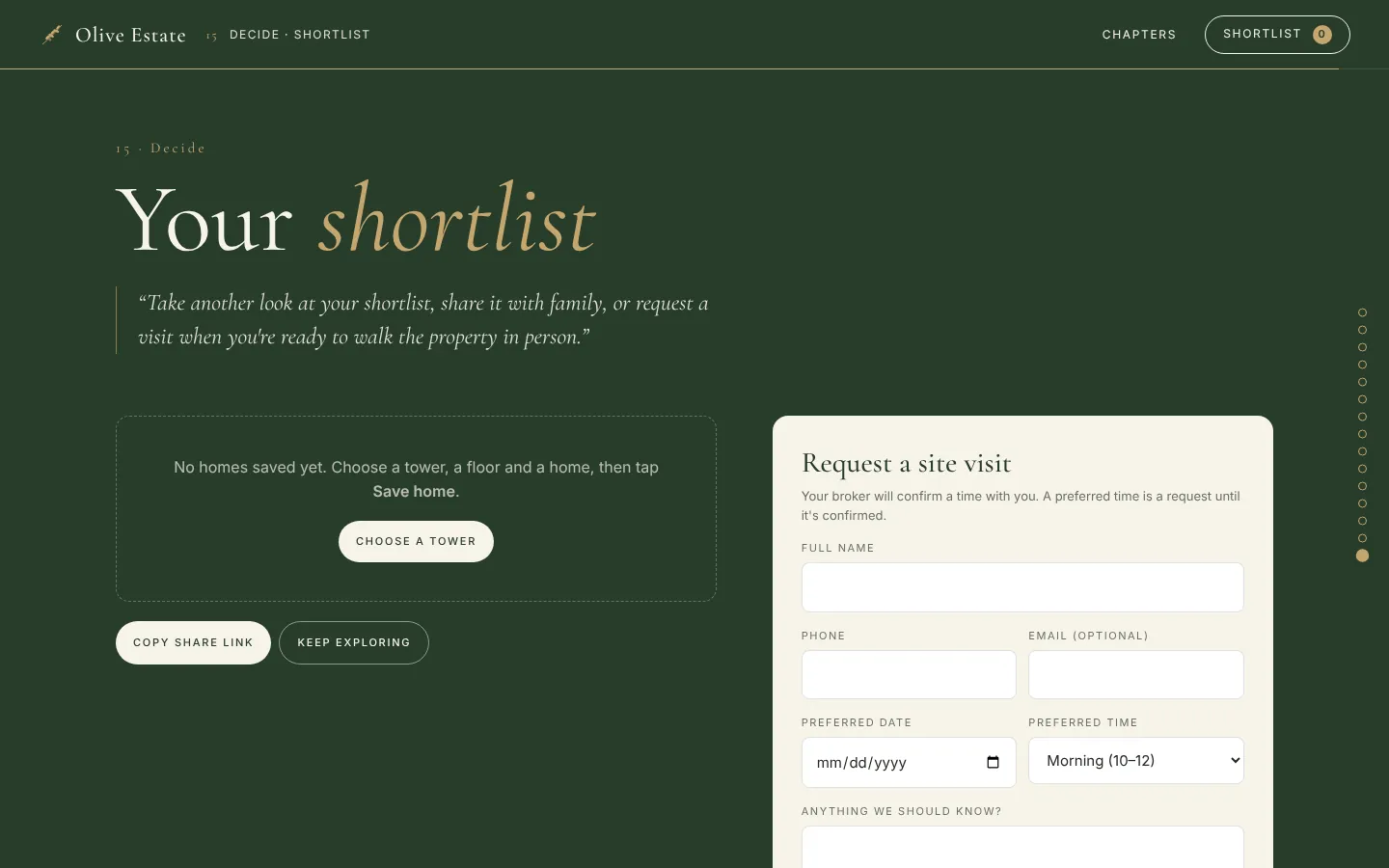
Buyers compare. A shortlist lets them save the homes they like and send the list with their enquiry. That gives your sales team a better first call, and it gives the buyer a reason to come back to the site.
4. Show real information, not placeholders
Floor plans, sizes, floors available and a clear starting price build trust. Hiding all of it behind a form pushes serious buyers to competitors who show it. If you cannot publish prices, show the size and floor range and say that the price is shared on request.
5. Load quickly on a phone
Most enquiries start on a mobile phone, often on a patchy connection. Compress images, avoid autoplaying video on first load, and test on a mid-range phone. A page that takes six seconds to appear loses buyers before the story starts.
6. Respond fast, and know when you did not
A lead that waits a day is a cooler lead. Every enquiry should reach the right person immediately, by email and in a lead inbox. The inbox should show each lead's status, so nothing sits unanswered. See what that looks like in our guide to the real estate back office.
7. Track where leads come from
Tag every ad and campaign link so each enquiry records its source. Within a month you will know which channel brings buyers who actually visit, not just those who click. Budget then follows the channels that work.
Putting it together
Olive Estate applies these ideas: one clear action, a short form, a home shortlist and a back office that receives every request. If you would like your project website to do the same, talk to us.