

What a real estate back office should do: lead inbox, inventory and shortlists
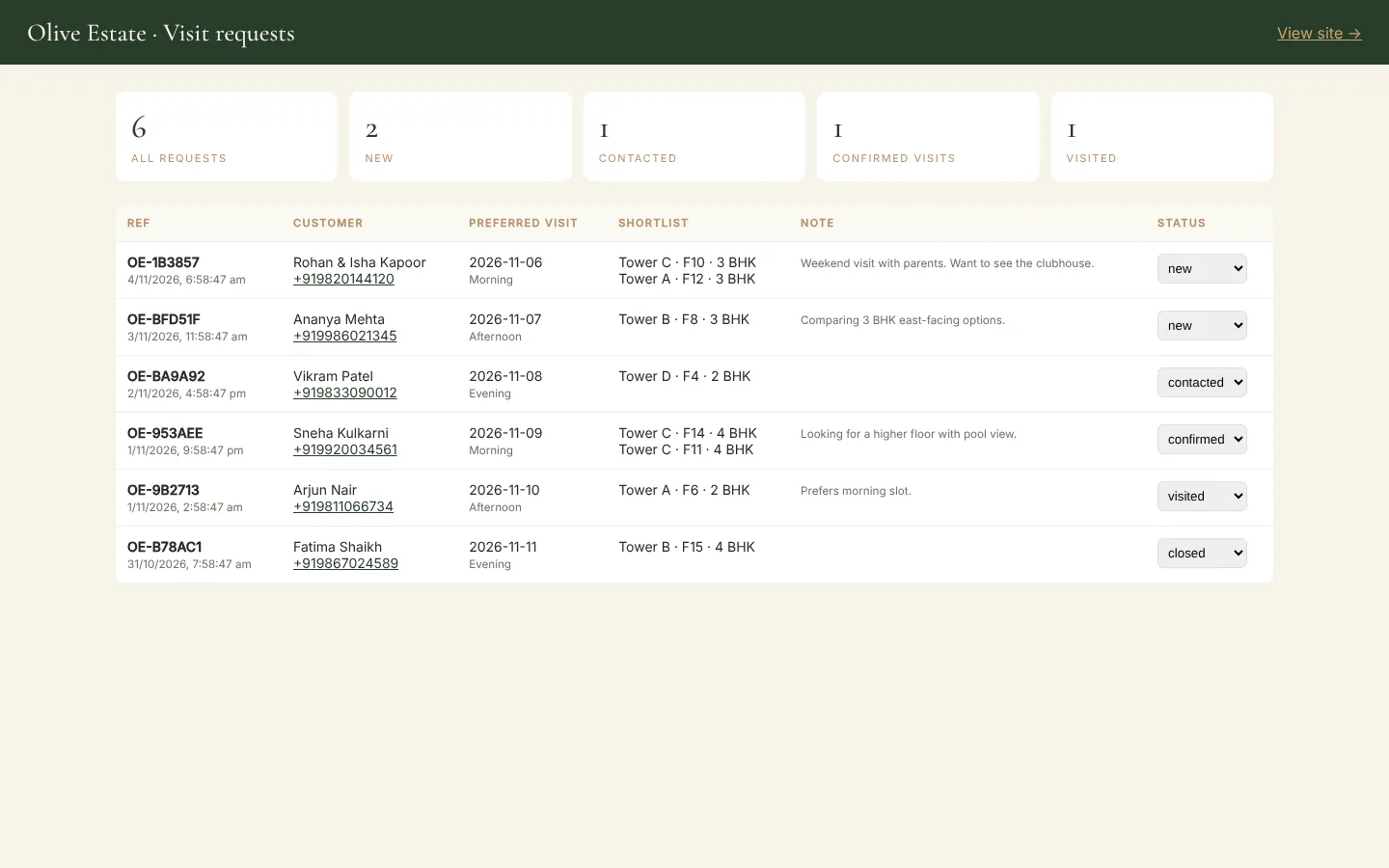
A real estate website that gets enquiries but has no back office quickly becomes a source of frustration. Leads arrive by email and get buried. Prices on the site go out of date. Nobody can say which campaign brought the buyer who finally booked. The website needs a back office, a private area where the sales team runs the day.
Here is what a useful one includes.
A lead inbox
Every enquiry from the website lands in one list, newest first, with the buyer's name, phone number, the home or project they asked about and when they asked. The team should be able to filter by status and export the list when they need to. Each lead gets a status such as new, contacted, visit booked, negotiating, won or lost, so everyone can see what needs attention.
The buyer's shortlist
If the website lets buyers shortlist homes, the back office should show the shortlist with each lead. The first call can then start with the homes the buyer actually liked, which feels attentive instead of generic.
Inventory and pricing you can edit
Availability and prices change often. The sales team should be able to mark a home as sold or on hold, change a starting price and update a floor plan without waiting for a developer. This keeps the website honest, and an honest website is a trusted one.
Content you can change yourself
Headlines, project descriptions, images, FAQs and offers should be editable from the same place, and the sales team should be able to hide or reorder sections of the page. Our own back office, for example, lets us rearrange and edit the homepage sections of this website without touching code.
Instant notifications
A new enquiry should email the right person immediately. Speed matters: a buyer who gets a call within minutes is far more likely to take it than one who hears back the next day.
Source tracking
Each lead should record where it came from: the campaign, the channel and the page. Over a few weeks, you will see which ads and articles bring buyers who actually visit the site, and you can move the budget accordingly.
Simple access control
The back office holds personal data, so it should be protected by a password, kept out of search results and, as the team grows, offer separate logins for different roles. It should also follow privacy rules in the markets where you sell.
What it should not be
A back office does not need dozens of dashboards. A small team needs a clear inbox, a way to keep the site up to date and a view of results. Anything more should be added only when a real need appears.
See it in practice
The Olive Estate website comes with a broker back office that receives visit requests and shortlists, and you can browse a live demo from our showcase. If you want the same for your project, get in touch.